
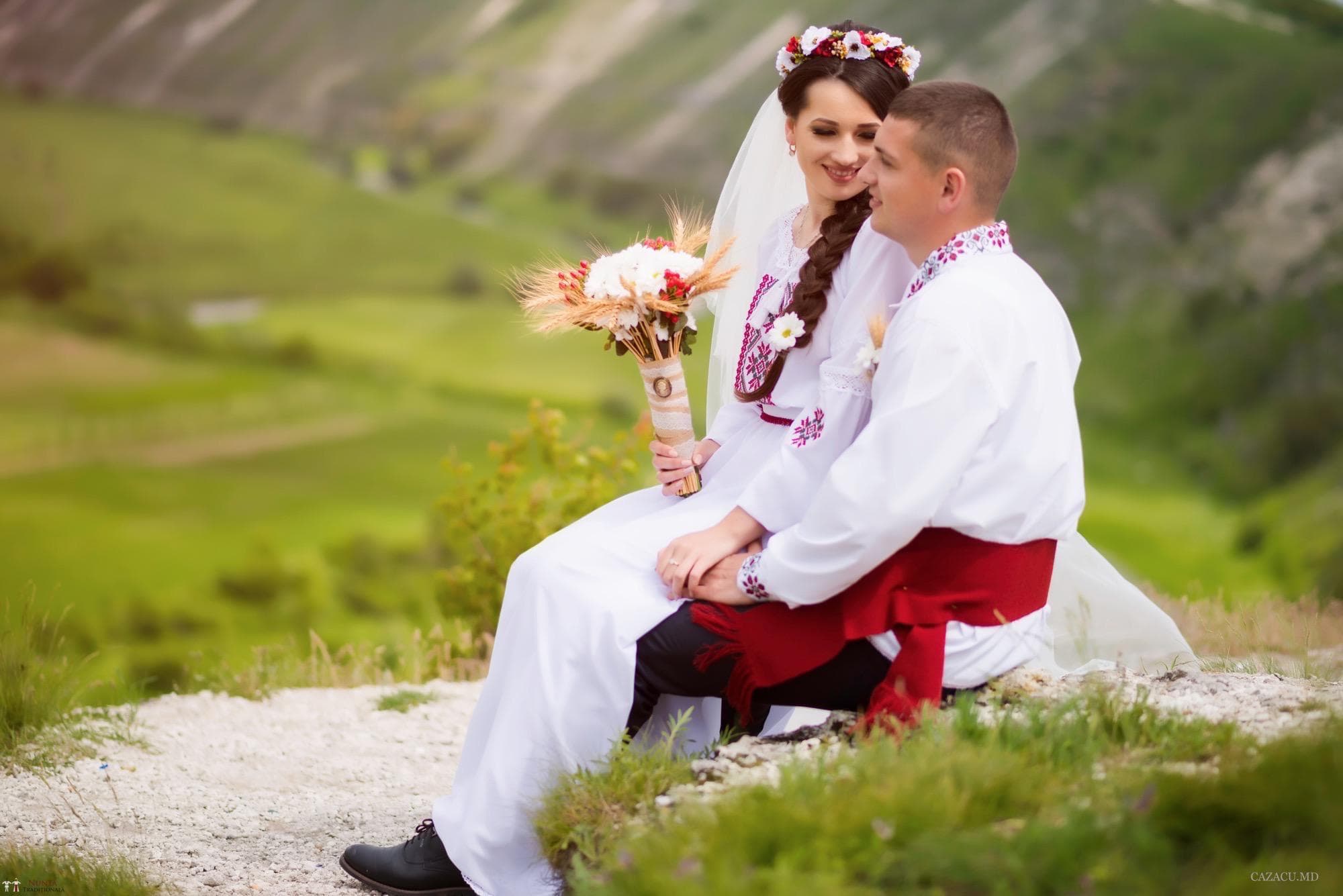
At a truly traditional wedding, the customs and traditions of our people simply cannot be missing. Wedding rituals carry a symbolic meaning, and some of them vary from one region to another.
Traditions and customs come down to us from our ancestors; they belong to the country they come from. Many people cherish these customs and keep them alive. They remind us of times long gone. Traditions make celebrations more beautiful, even when they are observed only formally. And on the occasion of the most beautiful event of all, there are many customs and traditions still practised today. We will guide you through the most important elements of the customs and traditions of a traditional wedding.
The matchmaking
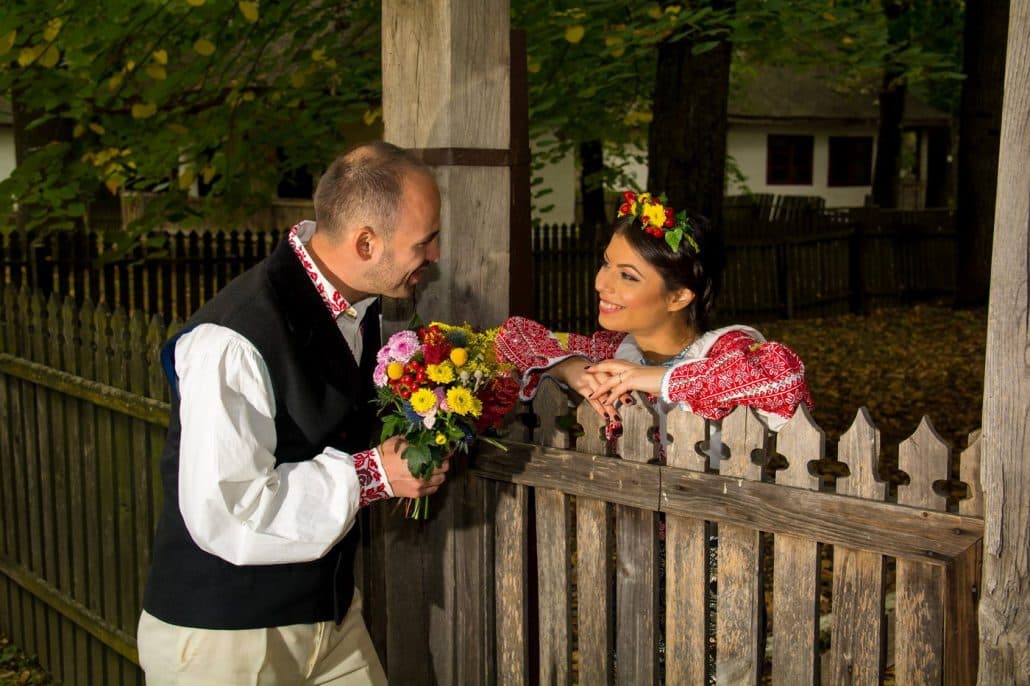
Whatever part of the country you are in, this is the first step the future groom must take. The custom of the pețit is also known as înțelegere, pețitură, croială, starostie or împețit.
Depending on the situation, either the groom comes alone — in the case of the bolder young men — or he is accompanied by his parents, godparents or friends, formally asking for the girl's hand so that she may become his wife. This custom is found in every region of the country. Today it is practised only symbolically.
Customs after the matchmaking
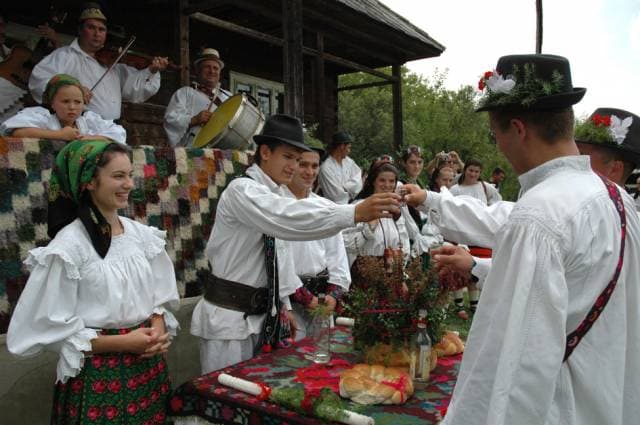
On the first Sunday after the matchmaking, the parents would meet and settle the dowry.
Then came the cutting of the cloth: usually the groom and the bride, together with their mothers, would go to the house of one of them and begin cutting the cotton cloth for the shirts of the groom, of the parents-in-law and of the brothers- and sisters-in-law. Afterwards a meal was laid out for everyone gathered.
The dowry
Not so long ago in our country, a dowry was settled before every wedding, both for the girl and for the boy. The dowry also reflected social standing. Girls without a dowry married with difficulty, or even remained unmarried.
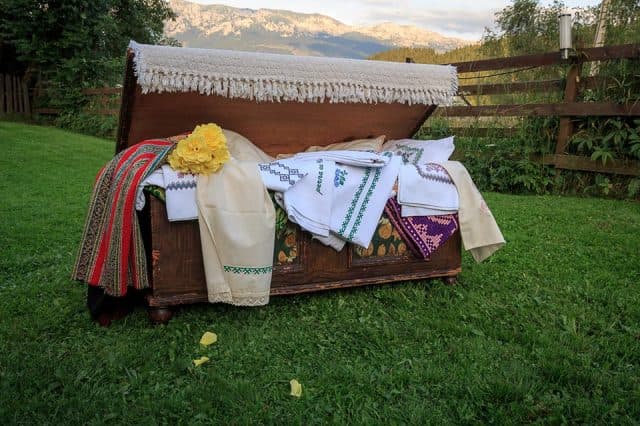
The content of the dowry differed from case to case. For the girl it generally included animals (cows, sheep, pigs, poultry and so on), plots of land, sacks of grain, gold coins and the dowry chest in which the textiles were kept. The boy was expected to have a house, land, an ox cart, animals and money. The dowry chest, or trunk, was the object that showed the bride's diligence as well as her status. The larger it was, the richer she was considered. The dowry chest is made of wood, beautifully painted with floral motifs or carved. These trunks were commissioned by the girl's father from the village craftsman, or bought at the fair. Inside the chest were placed the bride's own things, made by her: shirts, bed linen (sheets, pillowcases), rugs, woollen carpets (which the wealthier girls had), tablecloths, towels, bedding and so on. On top of the bride's chest were laid pillows (as many as possible), a quilt and towels. Moving the chest to the newlyweds' house was done with a great procession and was a true ritual. In Moldova, when the bride arrived with the chest at the boy's house, she would offer his relatives small gifts, such as towels or pillowcases. The dowry was celebrated along the way with hora dances. Today this custom is kept mainly in the countryside, and the dowry generally consists of furniture, household appliances and kitchenware.
The godparents' gift
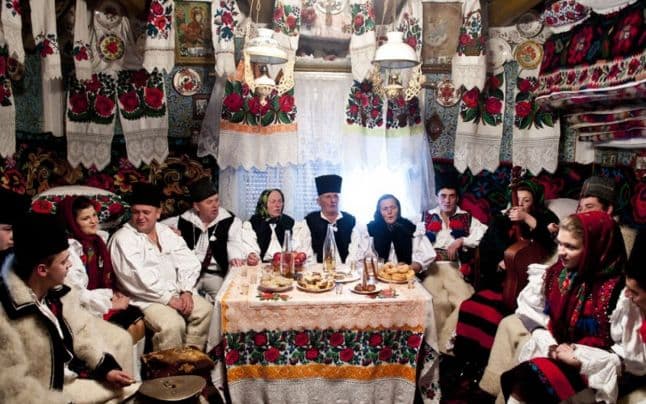
The poclon is the wedding gift for the godparents. They are considered the spiritual parents of the bride and groom. After choosing their godparents, the future spouses go to their house and offer them a gift. The godparents' obligation is to cover the cost of the bride's veil, the candles and the other things needed for the religious ceremony.
Some godparents do not want the couple to go to great expense for their gift and will even refuse an expensive one. In such cases, do not try to buy something costly. Choose a smaller gift. This way you will avoid putting your godparents in an awkward position. You might choose a coffee or tea set, a set of cutlery or — why not — a simple invitation to dinner at a restaurant, where you cover the bill.
The call to the wedding
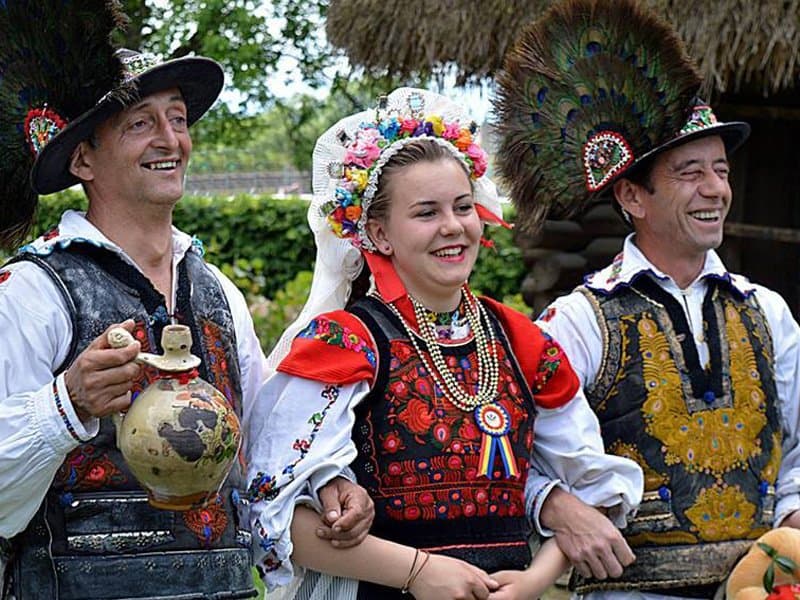
The call to the wedding means inviting people to the celebration. This custom takes place at different moments and in many ways, depending on local tradition. In Moldova, in the villages, the call to the wedding is made by the vornici, by the couple and by the parents-in-law. Before going round the whole village, the couple prepare notices once they are engaged, and then on a Thursday or a Saturday they mount their horses and ride to all the villagers to invite them to the wedding. In Moldova it was customary to carry a flask of wine, and if the person accepted, he would drink from the flask. Today very few dress in traditional costume and go through the village with flasks to invite people to the wedding. Modern cards — the so-called invitations, beautifully coloured and illustrated — have largely taken the place of this lovely custom.
The wedding processions
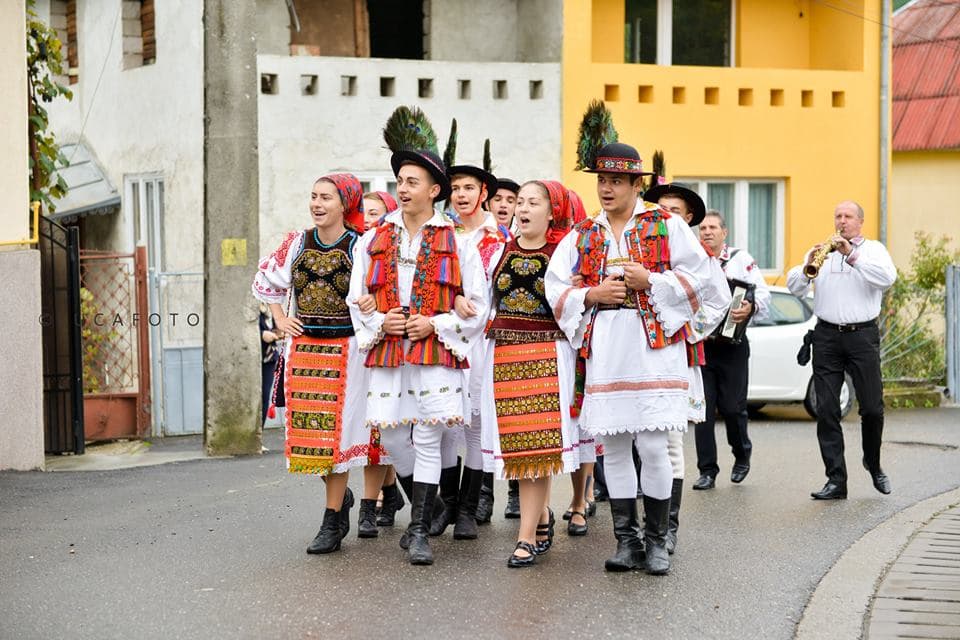
The stages of the wedding, or the wedding processions, are traditionally divided in every region of the country into the godparents' procession, the groom's and the bride's. The groom sets off in the morning with his group of young men towards the godparents' house, so that together with them he may go to fetch the bride. The great procession thus formed goes to the church, and after the religious ceremony it splits again into two groups: the groom goes to his house with the godparents and the parents, while the bride goes home with her parents-in-law, coming to the groom in the evening, where the great feast takes place.
Dressing the bride
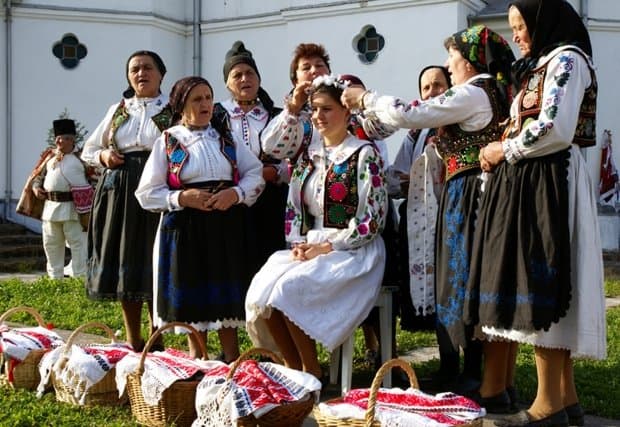
This custom takes place in the morning, before the religious ceremony. The bride is dressed in the house and in the very room where she grew up. She is helped to get ready by her mother, her godmother and her friends. The godmother places the veil and the bridal crown on her. Once the ritual is complete, the bride is offered a mirror to look at herself in. This mirror is covered with a veil. It is uncovered only when the groom pays a sum of money, so that his beloved may admire herself in it. The tradition stirs strong emotions both for the bride and for her parents. This custom illustrates the girl's parting from her parents. She bids them farewell and steps into a new stage of life, where she will be beside the chosen one of her heart, for better and for worse.
The bride's hora
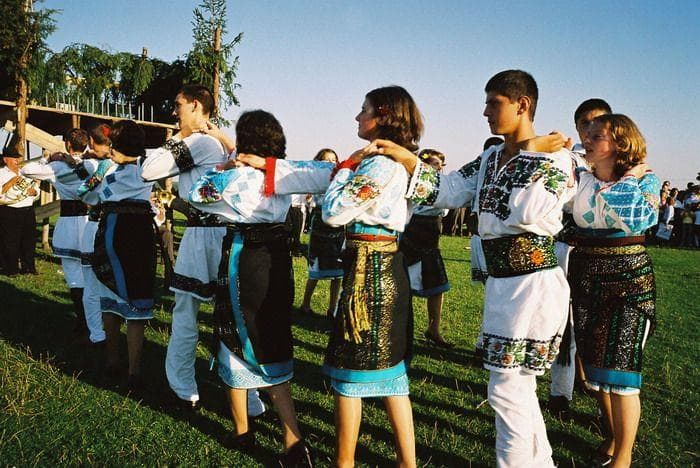
After the bride is dressed comes the bride's hora. This custom takes place at the bride's home, in the yard, where the whole wedding party is present. It is the godparents who lead everyone present into the dance, with lively steps. The couple are surrounded by their two godparents and by the guests, and together they strike up a wonderful hora to the sprightly sound of folk music. During the bride's hora, the bride's mother also has the chance to hand out small gifts to the parents-in-law, the godparents and close relatives. This tradition is a symbol of happiness and prosperity, and a delightful way to celebrate together with the wedding guests.
The bride's cake, also called the bride's colac
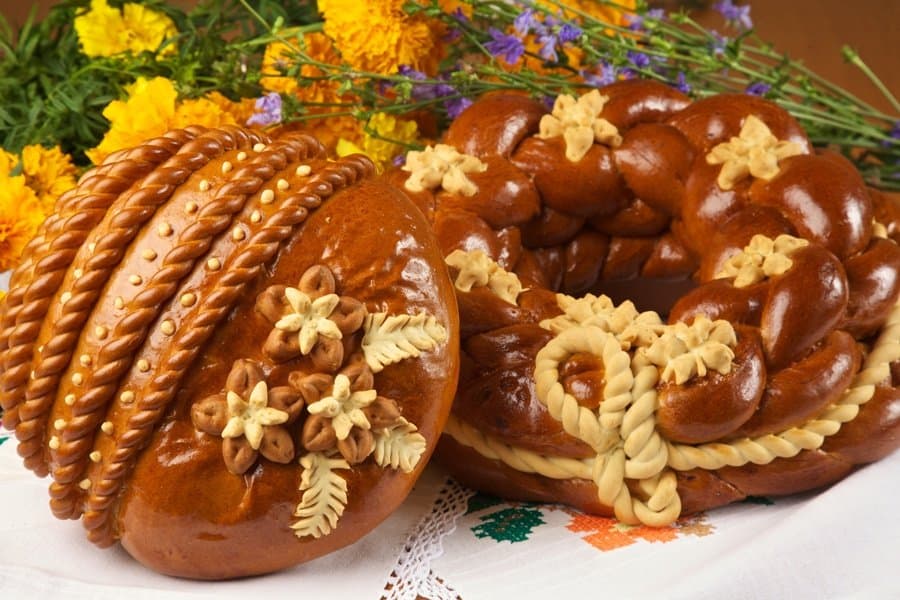
Weddings would not have enough magic if the old traditions were not part of them. This tradition takes place on the wedding day.
Once the groom and all the guests have arrived at the bride's house, the ritual of breaking the cake is performed by the bride's spiritual mother, the godmother, as a way of bringing her luck. Usually the bride's hora is held before this custom, but this varies from one region of the country to another. In some areas the bride's hora follows the breaking of the cake.
How does the ritual unfold? The bride is invited to sit on a chair in the yard of the house. The godmother breaks the cake over her head into four pieces and makes the sign of the cross. The pieces are given first to the couple, then all the guests must eat a small piece of the cake, for luck in life and for the good fortune of the marriage to come. In the villages, or in some regions, the godmother throws the pieces she has broken over the bride's head, or in the shape of a cross.
Breaking the cake is like a blessing given by the godmother to the bride, and a wish that the couple may have a long marriage full of happy moments. Instead of the classic braided cake, an alternative you may choose is a sweet bread or a round cake.
If you do not want the crumbs to fall into your hair and onto your wedding dress, ask your godmother to break the cake over your head onto a tray. This tradition is special, and if you decide to keep it, your godmother will appreciate it greatly. She will be glad of this occasion to wish you luck in your marriage. Breaking the cake is a symbolic and beautiful ritual that will delight those around you, and the couple will be blessed, so that their love may last a lifetime.
The hen dance
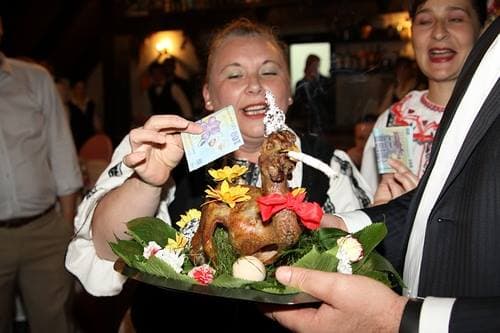
During the evening, towards the end, the hen dance was performed (stuffed hen was considered a special dish). A woman, or the groom's mother, would bring in a large hen, beautifully roasted, decorated with tinsel and flowers, with ears of wheat in its beak and various fruits arranged around it. A dance was performed and then it was taken to the godfather, who symbolically bought it; then he would break it apart and share it with the other guests at the table. The gifts were usually announced at the end. The announcing was done by a fiddler, a vornic or the godfather. The first to give money was the godfather, who was also expected to give the most. Next came the groom's parents, who would promise a house, money, animals and so on; the guests gave what they had: from money to animals, grain and things for the home (rugs, pillows, bedding and so on). Once the godfather had gathered it all, he would place it in a handkerchief, sprinkle salt over it and hand it to the bride, who kissed his hands.
Tying the bride's headscarf
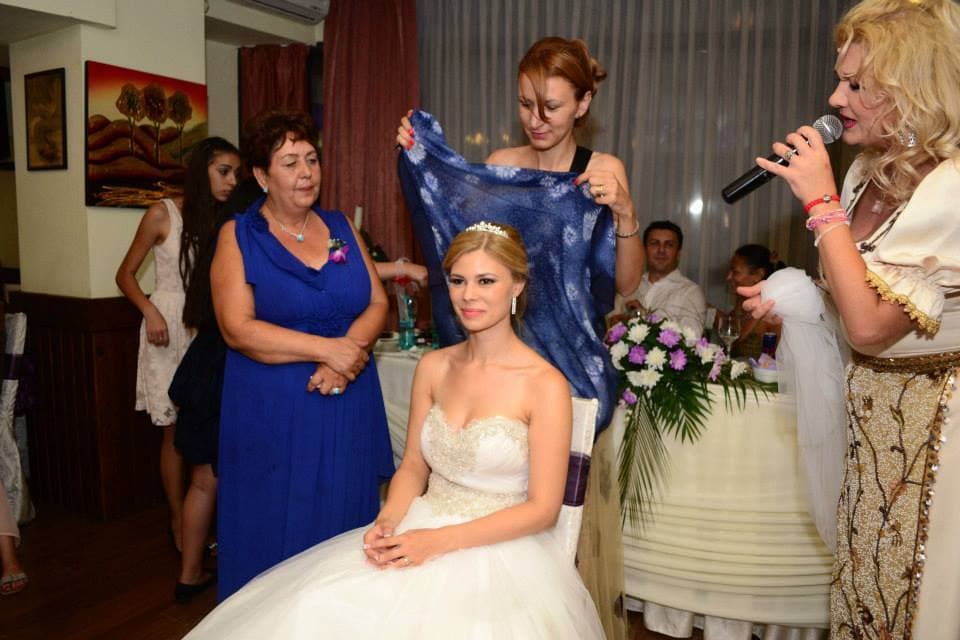
Towards the end of the wedding feast, the bride is seated on a chair in full view of everyone. The godmother exchanges the bride's veil for a headscarf. In this way she joins the ranks of married women. The veil is given to a young unmarried woman.
Stealing the bride
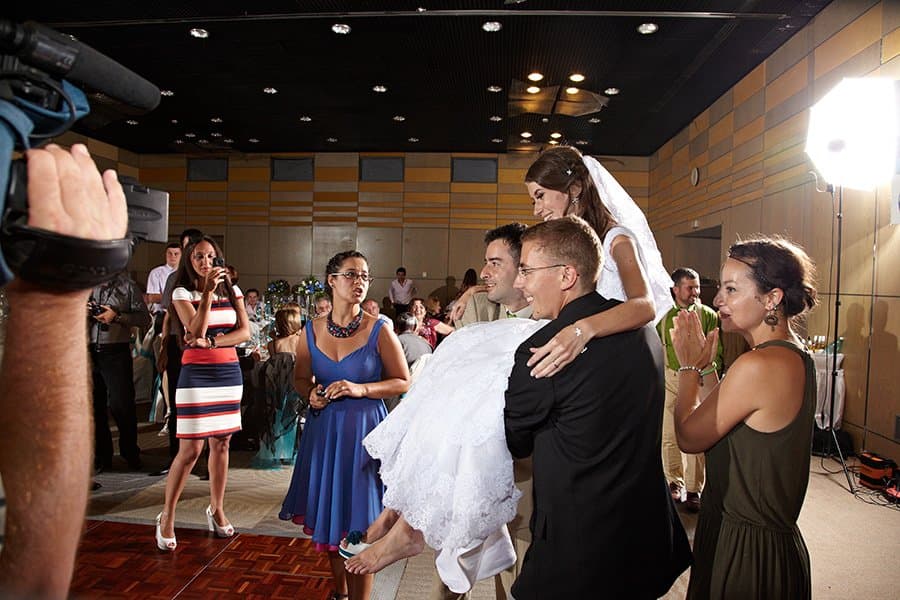
This cheerful and unforgettable custom is an old one and is very often practised at our weddings. It is said that the groom must be very attentive on the day of the great event and always keep an eye on the chosen one of his heart, otherwise he risks having her stolen. This amusing moment is planned by some of the wedding guests, who take advantage of a moment of the groom's inattention to steal the bride. Some brides want to be stolen, and to make sure this entertaining moment takes place, they let the guests know. At some weddings the kidnappers take the brides by surprise, stealing them when they least expect it. Once the bride has been stolen, the kidnappers bring her shoe or another of her belongings as proof to the groom. To buy her back, the groom must pay a sum of money, offer drinks or even complete amusing challenges set by the kidnappers. Sometimes he is required to declare his eternal love before the bride once more, or to complete certain tasks proving that he is worthy of being with her. In some regions it is not the bride who is stolen but her shoe. If the bride does not want to be stolen and says so, then only her shoe is taken, so as not to upset her. Once the groom has managed to recover it, he must, like a true knight, put the shoe back on the bride's foot. This gesture symbolises his unconditional love and his wish to be beside the chosen one of his heart, for better and for worse.
The chicken broth
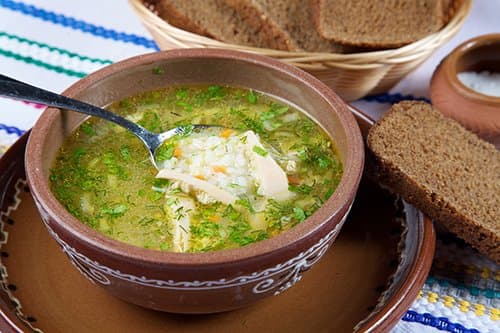
On the second day of the wedding, a meal is held at the groom's house or at his parents'. Present at this meal are not only the wedding godparents but also members of the family from both sides, the bride's and the groom's. In the past, this gathering was held to celebrate the bride's virginity; today it is organised only symbolically. Those present have the chance to spend time as a family, to talk about the event that has just taken place and to congratulate the newlyweds once more. They will also bring them blessings for a long and happy marriage. Various dishes are served at this feast, but the main one is chicken broth. Tradition and custom say that the broth must be made by the new wife or by the groom's mother. In the modern days we live in, wedding traditions are chosen by the couple. Some want a traditional wedding, while others opt for a modern one, adopting customs practised in other countries as well.
The Orthodox religious wedding, the vow before God
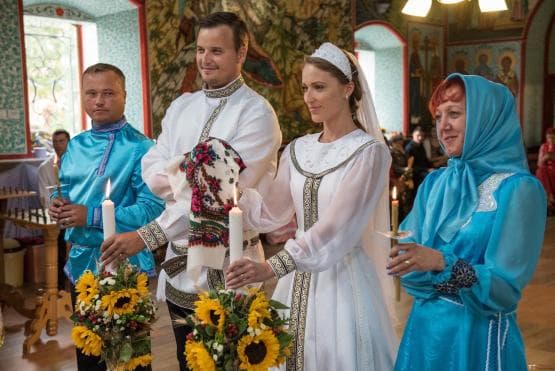
The religious wedding is that unforgettable moment in which you and your other half bind your destinies forever, making a vow before God. This ceremony is considered one of the Seven Holy Mysteries of the Orthodox Church. The religious wedding is a spiritual event in which the couple receive the blessing of the priest and of God. The future spouses make a covenant before the Holy Altar to be together and to love one another always, for better and for worse.
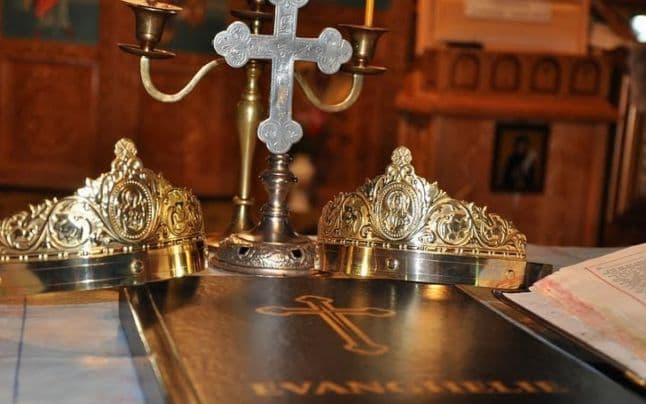
The crowns are made of precious metals and are placed by the priest on the heads of the couple. This symbolises the two of them stepping into the kingdom of love. Another symbol used is the cup of salvation. The priest gives the couple a cup of red wine. They must taste from it three times. This means that the couple will be together throughout life, in moments of happiness and in times of trouble. The wedding candles represent the love of the couple for one another, as well as the spiritual example offered by the couple's godparents.
The civil and the religious ceremony
At last the long-awaited moment is drawing near, the moment in which you will become a bride. Nothing can sound better than that, and nothing can overshadow your happiness.
It will be a day filled with emotion, traditions and unforgettable moments. And the start of this day, which will end with a splendid celebration, will be given by the civil and the religious ceremony. Because you will want everything to go perfectly at both events, we thought we would come to your aid a little and offer you a few ideas meant to help you on this very special day.
The civil ceremony on the same day as the religious one, or on different days
As is only natural, this is a decision the two of you will have to make, without forgetting your guests, especially those coming from other towns (some may welcome a day of rest, while others may not)
Also, if the ceremonies are celebrated on different days, both the couple and the guests are expected to wear different outfits. If you are organising your wedding on a limited budget, it may be better to celebrate both events on the same day, in order to avoid these extra costs. At the same time, if the ceremonies take place on different days, you will have to arrange transport for the guests twice. If this is not a problem, then you could opt for ceremonies on different days, so that you have time to prepare unhurriedly for both events. For example, on the day of the civil ceremony, after it is over, you can schedule a photo session to take all the group photographs, sparing yourselves one worry after the religious ceremony (of course, most people will want photographs with you in your wedding dress, but these can also be taken at the wedding reception)
The wedding vows
More and more couples want to write their own wedding vows, which is a very good thing, because it is only a few lines in which you express your feelings for the person you love, and it is something extremely personal
The vows can take the form of short poems, or they can be conversational in tone. What you include in them is entirely your decision. If you wish, you can step outside the usual patterns, drawing on lines from your favourite song for your wedding vows, or even on a few lines from your favourite love film. Be creative — the possibilities are endless!
Wedding ceremonies, whether civil or religious, are the moments in which you bind your destinies, moments you will never forget, so give them particular attention when you are organising your wedding
Curtea Domnească
Do not forget: when it comes to events of such special importance, the secret lies in the details!
The celebration goes on all night, until close to dawn. Towards the end of the meal, the godmother will remove the bride's veil and replace it with a headscarf. This custom symbolises the bride's passage from girl to married woman. The veil will be given to another unmarried girl, which means that she will be the next bride. The other girls will dance a farewell hora for the bride
Times of the year when weddings are not held
The wedding is the most beautiful event in every person's life, a day on which you feel your dreams are coming true. However, before setting the date of the most special day of your life, you should know that the church, according to tradition, forbids holding such events on certain days of the year.
No religious ceremonies are held and no weddings take place on fasting days.
There are four fasting periods in a year, and these are:
the fasting period of the Holy Feast of Easter
the fast of the Holy Apostles Peter and Paul
the fast of the Dormition of the Mother of God and that of the Nativity of the Lord
Weddings are also not held:
on the holy days of the Great Feasts
at the Baptism of the Lord
at the Presentation of the Lord
at the feast of the Annunciation
on Palm Sunday, on the occasion of the holy feast of the Ascension of the Lord
on the day of the Transfiguration, at the Exaltation of the Holy Cross
at the Entry of the Mother of God into the Temple
on the day of the Nativity of the Saviour
The priest does not perform religious weddings during Bright Week either, which follows the feast of the Lord's Resurrection. It is said that during this period the gates of heaven are open. Weddings are also forbidden during Meatfare, which begins at the end of February and lasts until the beginning of March. Do not set your wedding date during Pentecost either, or on the feast of the Beheading of St John the Baptist. If you are organising the great event in winter, do not set the date during the Christmas period, nor between Christmas and Epiphany. To see the days and months of these feasts and the fasting periods, it is best to consult the Christian calendars, as their dates can vary from one year to another.
The Orthodox Church does not perform religious weddings if:
the couple have not confessed before the wedding
they are blood relatives
they are entering a fourth marriage
On the day of the ceremony, the couple must bring with them:
the civil marriage certificates
the wedding rings
the wedding candles
the bride's bouquet
a bottle of red wine
the godmother's bouquet